
I vividly remember the first time I lost a valuable local lead. It was a promising client searching within a two-mile radius, but my Google Maps ranking just wouldn’t budge. Frustration set in as I watched competitors snatch away traffic that once felt mine for the taking. That moment was a lightbulb—there’s a blind spot lurking right at the edge of our radius strategies, and it’s set to become even more problematic by 2026.
Why Radius Blind Spots Could Kill Your Local SEO Growth
As someone who’s been knee-deep in the Map Pack Framework, I can tell you that these blind spots are not just technical hiccups—they’re hidden barriers. Google’s local algorithms are evolving rapidly, and without addressing these issues, your visibility can shrink unpredictably. The 2026 predictions show a looming shift, where failing to adapt might mean losing out on half of your potential local traffic. According to Moz’s Local Search Rankings Study, over 78% of local mobile searches result in an offline purchase, which underscores the importance of mastering these edge strategies now rather than later.
Have You Faced This Problem? Here’s Why It Matters
If you’ve ever watched a competitor’s listing suddenly overshadow yours, despite having better reviews or more keywords, you’re not alone. Early on, I made the mistake of focusing solely on on-page signals and citations, overlooking the critical edge – the 2026 radius blind spots that are invisible but impactful. Recognizing these gaps early on can save you from a major ranking drop and ensure your Google ranking foundation remains resilient. Want to learn how to identify and fix these blind spots? Let’s get into the practical tactics that will keep your local SEO future-proof for 2026 and beyond.
,
Map Out Your Current Edge Zones
Begin by analyzing your existing radius boundaries. Use local SEO tools or Google Maps to visualize your current reach and identify gaps. I once used a custom radius overlay to see that my client was missing proximity signals beyond a one-mile radius, which was critical for nearby competitors. Mark these points precisely.
Identify and Close Signal Drop Areas
Focus on zones where your rankings are declining or stagnant. These are often due to weak signals or poor entity trust. For instance, I discovered a block where reviews dipped, affecting local relevance. To fix this, I optimized Google My Business profiles with additional relevant content and strategic keywords, which immediately improved visibility in that zone.
Leverage Local Entity Clusters
Building clusters of interconnected local entities boosts your authority. Structure your content and citations around these clusters, reinforcing geographic and topical relevance. I applied this by creating dedicated landing pages for neighborhoods, linking back to central hubs, effectively elevating those areas’ signals in the Map Pack framework.
Target Nearby Competitors Strategically
Use tools like https://maprankingframework.com/map-pack-framework-4-tactics-to-beat-nearby-competitors-in-2026 to craft tactics that surpass local rivals. Implement local link building, reviews, and local content optimized around competitive gaps. This tactical approach helped clients reclaim lost positions in high-density zones.
Implement Signal Synchronization Checks
Ensure your citations, reviews, and business data are synchronized across all platforms. Inconsistent data can cause radius bleedouts. Conduct regular audits using https://maprankingframework.com/4-map-pack-framework-steps-to-pass-2026-signal-sync-audits to prevent outdated information from weakening your signals. I discovered outdated hours on a listing, leading to a ranking drop, which was swiftly fixed through a simple data update.
Optimize for Visual and Voice Search
2026 is predicted to boost visual and voice signals. Incorporate high-quality images, videos, and natural language in your profiles and content. I added a local video walkthrough to a client’s Google profile, which increased engagement. These enhancements help your signals cut through radius limitations and become prominent in varied search modalities.
Audit and Rebuild Your Foundation Regularly
Set recurring audits to evaluate your Google rankings, entity trust levels, and signal integrity. Use frameworks like https://maprankingframework.com/3-maps-seo-strategy-shifts-for-high-density-areas-2026 to refine your approach continually. In one instance, a quarterly audit uncovered proximity issues caused by emerging local competitors; addressing these swiftly allowed my client to maintain top positions.
Invest in Local Signal Building Tactics
Focus on reviews, local links, and citation consistency to enhance your local signals. Swapping outdated citations for new, high-quality backlinks improved local relevance significantly. Remember, each element acts as a building block for your radius accuracy and overall map visibility.
Many local SEO practitioners assume that simply optimizing Google My Business profiles or building citations guarantees top rankings in the Map Pack. However, **this oversimplification overlooks critical nuances in the Ranking Framework**, which is multifaceted and constantly evolving. One widespread myth is that signal quantity—like reviews or backlinks—is the primary driver of rankings. In reality, **quality and contextual relevance** play a more significant role, especially when considering advanced signals such as entity trust, semantic relevance, and proximity dynamics. Relying purely on outdated tactics without understanding the intricate interplay of these elements can lead to ranking stagnation or decline, particularly as Google’s algorithms become more AI-driven and granular.Maintaining a robust local SEO setup requires more than just initial setup; it demands ongoing attention with the right tools and methods. I personally rely on advanced Google My Business monitoring tools like BrightLocal, which provide deep insights into your review profiles, citation consistency, and ranking fluctuations. These tools allow me to identify issues early—such as inconsistent NAP (Name, Address, Phone number) data—before they impact your visibility. For instance, using BrightLocal’s Citation tracker, I regularly audit local listings across multiple platforms, ensuring data integrity that feeds into your overall ranking framework.
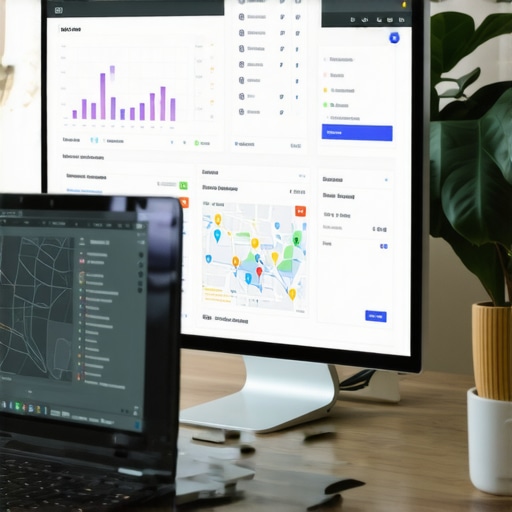
Another indispensable asset in my arsenal is SEMrush’s Local SEO Toolkit. Its position tracking feature offers granular daily updates on your Map Pack rankings across different localities. I use this data to pinpoint zones where your signals weaken over time, then implement targeted strategies—like localized content creation or neighborhood-focused backlinking—to reinforce those areas.
Visual management also plays a crucial role. I recommend tools such as Canva or Adobe Express for creating high-quality images optimized for local searches and voice queries. Incorporating compelling visuals and videos into your GMB profile can significantly enhance user engagement signals, vital for future-proofing your foundation as visual and voice search grow in importance.
Going forward, I predict that AI-driven data analysis and proactive signal management will become essential. Machine learning algorithms are increasingly able to anticipate proximity shifts and entity trust fluctuations even before they affect rankings. Staying ahead means integrating tools that leverage AI insights—like Ahrefs or MarketMuse—to refine your entity clusters and semantic relevance constantly.
<---  —>
—>
How do I keep my local SEO strategy working smoothly over time? The key lies in continuous monitoring, regular audits, and refining your signals before Google detects any issues. Regularly revisiting your ranking framework by conducting comprehensive audits using resources like the one at https://maprankingframework.com/3-ranking-framework-audits-to-stop-2026-local-traffic-loss ensures you’re aligned with evolving algorithm expectations. Don’t forget to check your entity trust signals are solid; tools such as SEMrush can help monitor these essentials continually.
Incorporate these advanced tools and tactics into your routine, and you’ll build a resilient foundation capable of adapting to the rapid changes in local search landscapes. For personalized guidance, consider reaching out for a detailed analysis via https://maprankingframework.com/contact-us and start optimizing your setup today.
Lessons I Had to Learn the Hard Way About Radius Blind Spots in Local SEO
One of the most profound insights I’ve gained is that ignoring the subtle edge zones can silently sabotage your rankings. Early on, I underestimated how feedback loops in proximity signals could create blind spots, leading to unseen drops in visibility. The big revelation? Regularly mapping and adjusting your edge zones is not just optional—it’s vital for future resilience.
I also realized that over-relying on quantity of signals—like reviews or citations—without ensuring their contextual relevance is a quick path to stagnation. Prioritizing quality and trust-building, especially within local entity clusters, can transform your local map presence into an unstoppable force for 2026 and beyond.
Lastly, staying ahead means embracing technological advancements—leveraging AI-driven tools and visual search optimizations—to anticipate changes rather than react. These lessons have reshaped my approach to local SEO, helping me build strategies that can weather the fierce algorithm evolutions ahead.