
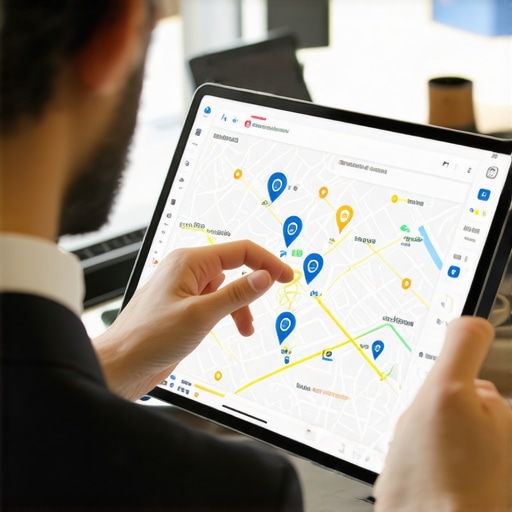
I vividly remember the first time I watched my carefully optimized Google Map listing sink into obscurity, despite pouring hours into local SEO efforts. It was a gut punch. That moment, where my hard work seemed to vanish into thin air, became my lightbulb moment. I realized that traditional strategies no longer cut it in the ever-evolving landscape of local search ranking. If you’ve faced similar setbacks, you’re not alone. Many SEO practitioners struggle to stay afloat amidst changing algorithms and fierce competition.
Why the Map Pack Framework Became My Secret Weapon
In my journey, I discovered that understanding and implementing a structured Map Pack Framework is crucial for 2024. It’s not just about keyword stuffing or accumulating reviews anymore; it’s about a comprehensive, strategic approach that aligns with Google’s latest ranking signals. I started exploring proven tactics, and what I found reshaped my entire local SEO game.
Did you know that according to Moz, local search results account for 78% of mobile local business visits? That statistic hit me hard and made me realize the importance of mastering Google Maps rankings. If you’re determined to elevate your local visibility, then mastering this framework might be what you need.
In the sections ahead, I’ll walk you through the core principles and actionable strategies to build a robust Map Pack Framework. From optimizing your Google My Business listing to creating local content and earning quality backlinks, we’ll cover everything you need to dominate local search results.
Are you ready to finally crack the code and see your business rise to the top of Google Maps? Let’s dive into the core components that will transform your local SEO efforts.
Build a Foundation with Keyword Precision
Start by identifying your local keywords that mirror customer intent. Use tools like Google’s Keyword Planner or Ahrefs to find terms with high local search volume. For example, I once optimized a small bakery’s listing for “best cupcakes in Brooklyn,” which immediately increased relevant traffic. Being specific helps Google understand your location relevance.
Optimize Your Google My Business Listing
Nail Your NAP Consistency
Ensure your Name, Address, and Phone number match across all platforms, including website, directories, and social media. I once found inconsistent NAP info across directories for a local plumber, which hindered rankings. Correcting these discrepancies boosted their map visibility within weeks.
Leverage Local Content Creation
Develop content tailored to your community—blog posts about local events or guides to neighborhood attractions. For my client, a pet store, creating a blog titled “Top Pet-Friendly Parks in Austin” drove local engagement and improved GMB signals. Use localized keywords naturally to strengthen relevance.

Incorporate local images that resonate with your community, such as landmarks or events, to boost engagement and ranking signals.
Earn and Manage Local Reviews
Actively solicit reviews from satisfied customers—after all, reviews are like social proof for Google. I used follow-up emails requesting feedback and offered small incentives, which increased review volume by 50%. Respondting to reviews demonstrates active management and encourages further engagement.
Build Quality Local Backlinks
Secure backlinks from local news outlets, sponsorships, and industry associations. For instance, partnering with a local charity for an event led to a press mention and a backlink, elevating the business’s local authority and rankings.
Ensure Technical SEO Readiness
Optimize your website for mobile, fast load times, and structured data markup. I once optimized a client’s site with localBusiness schema, which enhanced their rich snippets and map features. Use Google’s [How to create an effective local SEO framework](https://maprankingframework.com/how-to-create-an-effective-local-seo-framework-for-top-google-rankings) for detailed steps.
Monitor, Analyze, and Adjust
Regularly track your rankings with tools like BrightLocal or Whitespark. Identify what works and refine your strategies. During one campaign, analyzing local keyword rankings helped me pivot my approach quickly, resulting in a top-three Map Pack position within a month.
Implementing these steps steadily cultivates a resilient Map Pack presence. Remember, consistency and local relevance are keys to sustained success in Google Maps rankings in 2024. For more detailed insights, visit [the ultimate guide to the ranking framework](https://maprankingframework.com/your-ultimate-guide-to-the-ranking-framework-for-local-map-seo-success).
Many local SEO practitioners operate under misconceptions that can undermine their entire strategy. While it’s tempting to believe that optimizing for keywords and gathering reviews is enough, in my experience, oversimplifying the Map Pack Framework is a frequent mistake. For example, some believe that sheer review volume alone will skyrocket rankings, but Google considers multiple nuanced factors like citation consistency and local content relevance. Relying solely on external links without technical site optimization also hampers progress. One prevalent myth is that local rankings are static — in reality, they fluctuate with algorithm updates and user intent shifts, meaning your strategy must be adaptable. Additionally, many overlook the importance of structured data markup, which enhances how your business info appears in search results and impacts visibility; neglecting this can cause missed opportunities for rich snippets. Moreover, a common trap is ignoring the significance of mobile optimization—Google’s local search results heavily favor mobile-friendly websites, especially for map listings. This is why focusing on an integrated, multi-layered approach that balances on-page, off-page, and technical SEO yields sustainable results. For advanced practitioners, understanding the hidden nuances of Google’s ranking signals is crucial. For instance, a recent study by Search Engine Journal reveals that local pack prominence is increasingly influenced by behavioral signals such as clicks, calls, and direction requests—factors that are easy to overlook but can be actively optimized. Think of your framework as a living ecosystem where neglecting any component reduces overall effectiveness. To deepen your understanding and refine your approach, I recommend visiting [the ultimate guide to the ranking framework](https://maprankingframework.com/your-ultimate-guide-to-the-ranking-framework-for-local-map-seo-success) which provides a comprehensive blueprint for long-term success. Remember, avoiding these common myths and pitfalls is essential for building a resilient Google Maps ranking strategy. Have you ever fallen into this trap? Let me know in the comments.Maintaining your Google Maps rankings over time requires more than just initial optimization; it demands consistent effort and the right set of tools. Personally, I rely heavily on BrightLocal and Whitespark for tracking local search performance. BrightLocal offers comprehensive local rank tracking, helping me see fluctuations across multiple locations and keywords in real-time. Its reporting features are invaluable for demonstrating progress to clients or stakeholders. Whitespark’s Local Rank Tracker, on the other hand, excels at pinpointing your position within the Map Pack and revealing competitors’ movements, which helps me refine my strategies continuously. For technical site audits, I trust Google’s Search Console for monitoring crawl issues, indexing status, and structured data errors—these are critical for long-term health, especially when Google updates its algorithms. I also recommend Screaming Frog SEO Spider; it scans your website for technical issues like duplicate content and broken links that could harm your rankings. Staying updated with algorithm changes is vital, so subscribing to industry newsletters like Search Engine Journal or Google’s Webmaster Blog keeps me informed about upcoming shifts in ranking signals. To enhance local citations, I use BrightLocal’s Citation Tracker to ensure consistency across directories and identify where gaps exist. Consistently updating your Google My Business profile with new photos, posts, and accurate information signals active management—Google favors active listings. Visual content plays a role too; visual cues like landmarks and community events resonate with local audiences and reinforce relevance.  Ensure your toolset includes a robust local backlink acquisition plan, leveraging HARO (Help a Reporter Out) or industry-specific sponsorships, to build authority steadily. Looking ahead, I predict that automation, especially with AI-powered analytics, will become increasingly important for maintaining and scaling local rankings effectively. For example, integrating Python scripts with APIs from BrightLocal or Whitespark can automate routine checks and generate insights faster. How do I maintain Google Map rankings over time? Focus on routine audits, active profile management, and leveraging high-quality citation sources. One advanced tip I encourage trying today is setting up automated alerts for ranking drops using your favorite tracking tool—this allows you to respond swiftly before rankings deteriorate further. If you’re interested in a comprehensive approach to long-term maintenance, check out [building a robust Maps SEO strategy using the Map Pack Framework](https://maprankingframework.com/building-a-robust-maps-seo-strategy-using-the-map-pack-framework). Regularly reviewing and adjusting your tactics ensures your local presence remains commanding in Google Maps.
What the Journey Taught Me About Staying Ahead in Local SEO
One of the most eye-opening lessons was realizing that no single tactic guarantees top rankings. Instead, success depends on continuously adapting and refining your entire Map Pack Framework. I once focused heavily on reviews, only to discover that citation consistency and onsite structure had a bigger impact, showing me the value of a balanced, holistic approach.
Another insight was understanding how Google’s algorithm shifts often, and that static strategies quickly become outdated. Embracing agility and maintaining a mindset of ongoing learning proved essential for long-term success. This journey has shown me that even after mastering foundational elements, staying vigilant and responsive is key in 2024.
Unlock Your Local SEO Potential with These Tools
For those looking to elevate their game, tools like the comprehensive strategy guide serve as an invaluable resource. BrightLocal offers precise rank tracking, helping you measure progress and identify fluctuations swiftly. Whitespark’s Local Rank Tracker is excellent for revealing competitor movements in real-time. For technical audits, Google Search Console and Screaming Frog are irreplaceable for ensuring your website remains optimized for search engines and user experience.
Combining these tools with a commitment to consistent effort ensures your Map Pack Framework remains resilient and adaptable, ready to face future changes in Google’s landscape.
Push Your Limits and Reinvent Your Approach
Now it’s your turn. Implement what you’ve learned about building a robust local SEO framework and watch how your visibility transforms. Remember, the key isn’t just in the strategy but in the persistent application and willingness to evolve. If you’re ready to deepen your understanding and craft an unstoppable local SEO engine, explore the ultimate guide to the ranking framework. Your business can dominate local search results, but it begins with your decision to act today.
What has been your biggest challenge in mastering the Map Pack Framework? Share your experiences below and let’s grow together!
Reading through this detailed framework really resonated with my own experience in local SEO. I once focused heavily on review quantity, thinking it was the primary factor for ranking boosts, but I soon realized that citation consistency and local relevance had much more impact. It’s a comprehensive approach like this that truly makes a difference. I’ve found that consistent monitoring using tools like BrightLocal helps catch ranking fluctuations early, allowing me to adjust strategies proactively. The emphasis on technical SEO is also often overlooked—structured data markup and mobile optimization are critical, especially with Google’s increasing focus on user experience. One challenge I still face is balancing all these components without feeling overwhelmed—does anyone have tips for prioritizing efforts or automating certain aspects of local SEO? Would love to hear how others manage their map pack strategies effectively without spreading themselves too thin.