4 Metrics That Finally Prove Your Map Pack Visibility is Actually Making Money
I have spent decades in the trenches of local search, and if there is one thing I have learned, it is this: a #1 ranking on Google Maps is a vanity project unless it results in a deposit in your bank account. I have seen business owners pop champagne because they finally hit the top spot for “personal injury lawyer” or “emergency plumber,” only to realize three months later that their phone isn’t ringing any more than it was when they were at the bottom of page one. They fell into the “Vanity Metric” trap.
The “Vanity Metric” Trap
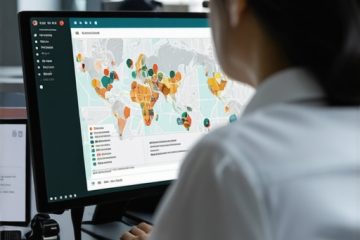
In the current local search landscape, proximity and visibility are often treated as the ultimate goals. Marketing agencies love to send colorful heatmaps showing green pins across a 10-mile radius. While those maps are a great visual representation of google business profile seo, they don’t pay the bills. Visibility is just the infrastructure; it is not the result. As Rashid Rehman once aptly put it, “Local SEO isn’t marketing; it’s infrastructure.” If your infrastructure is built but no one is traveling the road to buy your products, the project is a failure.
As we head toward 2026, the local algorithm has become exponentially more complex. Google is no longer just looking at who is closest or who has the most keywords stuffed into their description. It is looking at user behavior, engagement, and the “real-world” signals that a business is actually serving its community. If you are paying for a google maps ranking service, you need to demand more than just a ranking report. You need to see the movement of the needle on revenue. To do that, you must stop looking at “impressions” and start looking at the four specific metrics that bridge the gap between a digital pin and a physical customer.
I’ve consulted for a real estate agency that saw a 450% boost in Google Map visibility in just four months. On paper, it was a massive win. But we didn’t stop there. We tracked the inquiries back to the Map Pack, proving that the visibility led to a record-breaking quarter for their agents. Without that data, the SEO spend would have looked like an arbitrary expense. Here is how you prove that your ranking framework for local map SEO success is actually working.
Metric #1: Direct Phone Calls and the “Call-to-Lead” Ratio
For most local businesses – especially service-area businesses like HVAC, locksmiths, and restoration companies – the phone call is the “Gold Standard” of local ROI. When someone searches for a service on mobile, the “Call” button is the most prominent action they can take. However, simply looking at the “Total Calls” number in your Google Business Profile (GBP) insights is a rookie mistake.
To truly understand your ROI, you must perform deep google business profile optimization to ensure that the calls you are receiving are high-intent leads. Not every call from a Map Pack listing is a new customer. Often, existing customers use the Map Pack as a quick way to find your number for support or billing questions. To prove your visibility is making money, you need to calculate your “Call-to-Lead” ratio.
Differentiating New Leads from Support Calls
If you want to get more calls from google maps, you need to know which calls are actually converting. Use a dedicated call-tracking number on your GBP listing. This allows you to record calls and use AI-driven transcription to flag “conversion” keywords like “quote,” “appointment,” or “price.” If your Map Pack visibility is high, but 70% of your calls are from people asking for your hours or checking on an existing order, your google maps ranking service is attracting the wrong traffic.
A high-performing profile should see a steady increase in call volume that correlates directly with your ranking improvements. But more importantly, the quality of those calls should remain high. If you are a local SEO reseller trying to prove results, showing a client a list of 50 recorded leads compared to 50 “total calls” is the difference between keeping a client for life and getting fired in month three.
Metric #2: UTM-Tracked Website Visits (The “High-Intent” Traffic)
One of the biggest gaps in local SEO reporting is the failure to distinguish between “Organic Traffic” and “Map Pack Traffic.” By default, Google Analytics lumps both of these into the “google / organic” bucket. This makes it impossible to know if your revenue is coming from your blog posts or your local map presence.
To fix this, you must use UTM parameters on your primary website link within your Google Business Profile. A standard UTM string looks like this: ?utm_source=google&utm_medium=organic&utm_campaign=gbp_listing. By tagging your URL this way, you can go into Google Analytics and see exactly how many people clicked through from the Map Pack and, more importantly, what they did once they arrived.
Why Map Pack Traffic is Superior
Traffic from a google maps ranking service often has a significantly higher conversion rate than standard organic search traffic. Why? Because the “near me” intent is baked into the search. A user looking at the Map Pack is usually in the “Decision” or “Action” phase of the buyer’s journey. They aren’t looking for a “how-to” guide; they are looking for a provider.
When analyzing this traffic, look at the “Goal Completions” in Analytics. Are these visitors filling out contact forms? Are they booking appointments? If you notice that your Map Pack traffic has a 15% conversion rate while your general organic traffic has a 2% rate, you have definitive proof that your local SEO spend is your most efficient marketing channel. If you find that your traffic is high but conversions are low, you might be ghosting leads just two blocks away because your landing page isn’t optimized for local intent. You can use mapping tools to see exactly where your rankings drop off and tailor your landing pages to those specific neighborhoods.
Metric #3: Direction Requests as a Proxy for Foot Traffic
For brick-and-mortar businesses – restaurants, retail stores, dental clinics – the “Direction Request” is the ultimate “intent to buy” signal. Unlike a website click, which could be someone just “kicking the tires,” a direction request indicates that a human being is physically moving toward your location with the intent to transact.
Data from Rankmax and other industry leaders shows that getting into the Map Pack dramatically increases physical conversions. However, you shouldn’t just look at the raw number of requests. You need to use local seo tools to visualize where these requests are originating. Are people driving from the affluent suburbs to reach your downtown store? Or are all your requests coming from within a two-block radius?
Heatmapping the Path to Purchase
Modern google maps seo tools allow you to see neighborhood-level heatmap reporting. If you see a surge in direction requests from a specific zip code where you recently ran a local ad campaign, you’ve successfully closed the loop on your multi-channel marketing. Furthermore, this data helps you understand your “true” service area. If you are ranking well in a neighborhood but getting zero direction requests from it, there may be a psychological barrier – perhaps a bridge, a highway, or a perceived safety issue – that is preventing customers from visiting. This insight allows you to pivot your strategy, perhaps by emphasizing “easy parking” or “convenient location” in your google business profile seo efforts.
Consider the case of a multi-location retail chain that achieved 280% growth in Map Pack visibility. By tracking direction requests alongside their POS (Point of Sale) data, they were able to attribute a 3.4x increase in local leads directly to their GBP optimization. This is the level of data-driven certainty that business owners need in 2026.
Metric #4: Review Velocity vs. Lead Conversion
Many business owners view reviews as a “nice to have” or a simple social proof mechanism. In reality, reviews are one of the most potent conversion engines in the local algorithm. But the metric you should be watching isn’t your total review count – it’s your “Review Velocity.”
Review Velocity is the speed at which you acquire new reviews. Google’s algorithm prioritizes businesses that are actively engaged with their customers. A business with 500 reviews from three years ago is less relevant than a business with 50 reviews, 10 of which came in the last month. To rank google business profile listings effectively, you need a consistent stream of fresh, high-quality feedback.
The Math of Trust
There is a direct correlation between your review rating and your lead conversion rate. A jump from a 4.2 to a 4.7 star rating can result in a massive spike in phone calls and direction requests, even if your ranking position stays the same. This is because a google business profile ranking is only half the battle; the review rating is what closes the deal. If you are at the top of the Map Pack but your competitors have better recent reviews, you are essentially paying to generate leads for them.
You should implement a review automation strategy to ensure your velocity remains high. When you combine high visibility with a high review velocity, you create a “compounding interest” effect for your local SEO. You aren’t just getting seen; you are building an authoritative wall that makes it nearly impossible for customers to choose anyone else. Don’t forget to look at forgotten business profile fields like “Owner Updates” to further boost engagement and conversion signals alongside your reviews.
The 2026 Outlook: Beyond the Map Pack
As we move toward 2026, the way users interact with local search is shifting. AI Overviews (SGE) and “near me” intent are becoming more conversational. Google is increasingly acting as a concierge, answering questions directly in the search results. In this environment, the four metrics discussed – Calls, UTM Traffic, Directions, and Review Velocity – become even more vital. They are the only metrics that AI cannot easily spoof or ignore.
Rankings are a leading indicator, but revenue is the only lagging indicator that matters. If you are tired of guessing whether your marketing spend is working, it is time to audit your strategy. Use a google business profile audit tool to identify the gaps in your current profile. Are you missing UTM tags? Is your review velocity stalling? Is your call-to-lead ratio abysmal?
Stop chasing the ghost of “Visibility” and start building a Map Pack presence that acts as a predictable revenue generator. Whether you are a solo practitioner or managing hundreds of locations, the data is there. You just have to stop looking at the vanity metrics and start looking at the money. To get started on a path toward measurable growth, explore a professional google maps ranking service that prioritizes ROI over simple green pins on a map. Your bottom line will thank you.